Some dreams
take a lifetime.
A film, a dormitory wall, a midnight bus, a promise kept. These are the moments that changed the course of my book—and my life.
Why I kept coming back to Stallone
I began by trying to understand Stallone. What connected the man in the interviews to the characters on screen? Gathering his words became a writing project, and finishing that project became a test of my own persistence.
Open each chapter below to follow the choices, setbacks and people behind the photographs. The dates mark what happened. The story is in what it took to get from one to the next.
1982The film ended. My questions didn’t.
+
The film ended. My questions didn’t.
I was sixteen when I watched First Blood. The film became the beginning of a much longer interest in Sylvester Stallone: the man who wrote and played these characters, and the experiences that gave his stories their force.
Years later, as a journalist, I would make my living asking people about the moments that changed them. Looking back, this was one of mine. I had no book to show anyone yet. I had an interest that I kept returning to, long after the screening was over.
1988A dormitory wall became the first page.
+
A dormitory wall became the first page.
In teachers’ college, I copied Stallone’s words from a magazine and pinned them to my dormitory wall. I began gathering his interviews and the ideas in his films into a manuscript. The words were close enough to read every day; the man who had spoken them was a world away.
I wrote to Hollywood. The letters came back stamped “received”, with a short note. That was a response, but it did not bring the book into print. The manuscript remained with me as I became a journalist and began telling other people’s stories.
I could research a subject and write an article. Learning how to finish and publish this particular book would take much longer.
22 January 1997Four copies. A midnight bus. One introduction.
+
Four copies. A midnight bus. One introduction.
I heard that Stallone would be at the opening of Planet Hollywood Singapore and set myself a deadline. I took leave to rewrite the manuscript, worked on the layout and cover, and made four bound copies. The finished book came together at 10.30 p.m. on 20 January. At midnight, I was on the bus to Singapore.
The PR company initially turned down my request to hand the book to him, then gave me the green light on the evening of 21 January. Even with that permission, I had no clear way to make the handover happen. During the opening, I climbed a fence to reach the front of the stage. Twice, an opportunity to give him the book slipped away.
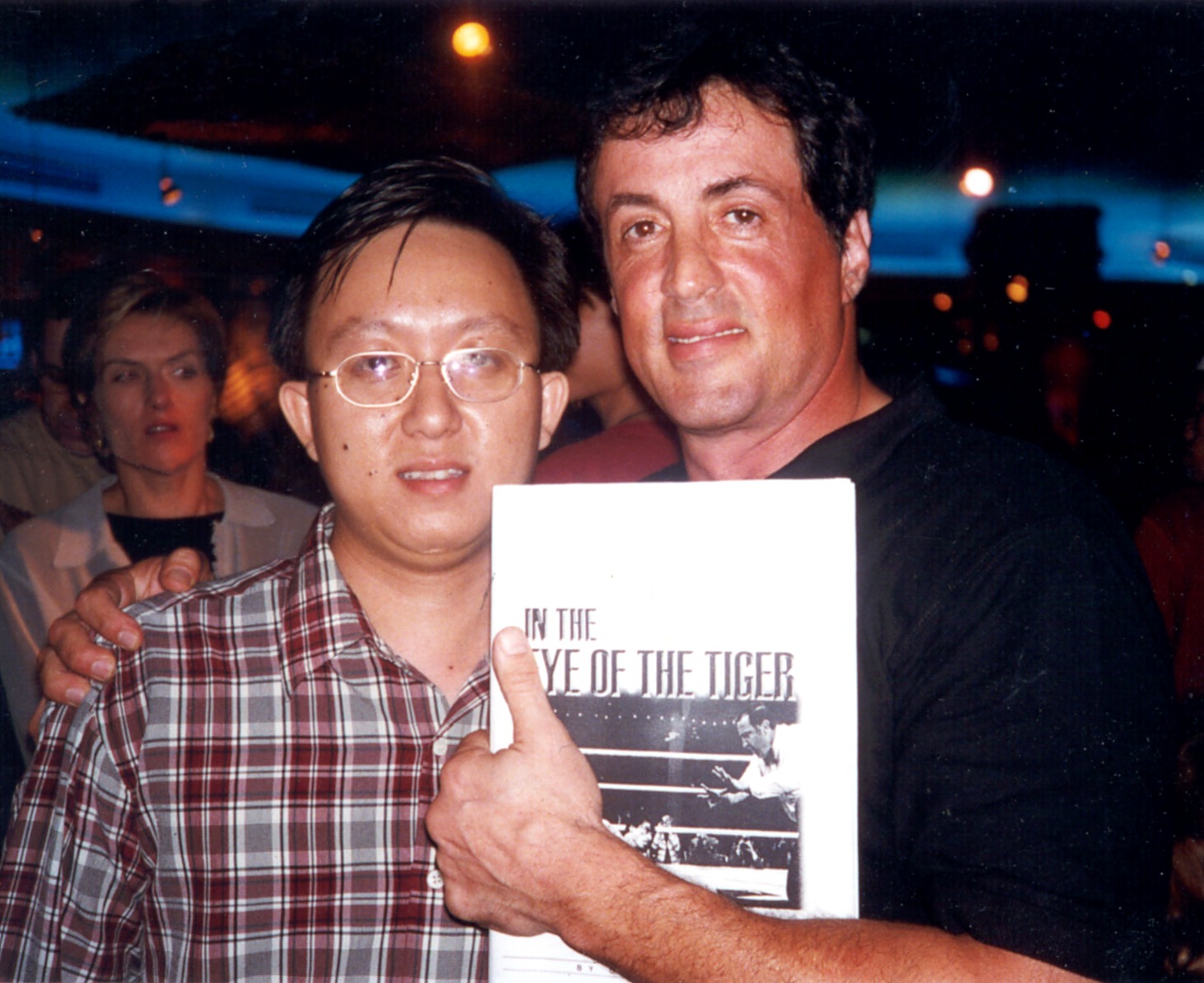
Later that night I found Syed Yusof Syed Nasir and asked for his help. He took the manuscript to Stallone and introduced me as a Malaysian journalist who had written a book about him. Stallone stood, shook my hand and posed for a photograph. My manuscript had finally reached him. It was still unpublished.
12 December 2006I would finish it—even for nothing.
+
I would finish it—even for nothing.
By the early hours of 12 December, the delays and obstacles had brought me close to abandoning the book. I had carried it for years. The question was no longer whether I believed in Stallone’s message, but whether I could keep putting time and effort into a project with no certain outcome.
Then I began to question the condition I had placed on finishing. Why did the book have to depend on someone else waiting for it, or on what I might receive? I decided I would finish even if I received nothing in return. That decision gave me a reason to continue that did not depend on a promise of success.
I wrote to Jacqueline Stallone again. Her reply came within half an hour. It opened the way to what followed, but there was still a book to finish and a visit to arrange. The reply began the next part of the work.
Read the story behind that decision ↗22 January 2007Ten years to the day. She kept her word.
+
Ten years to the day. She kept her word.
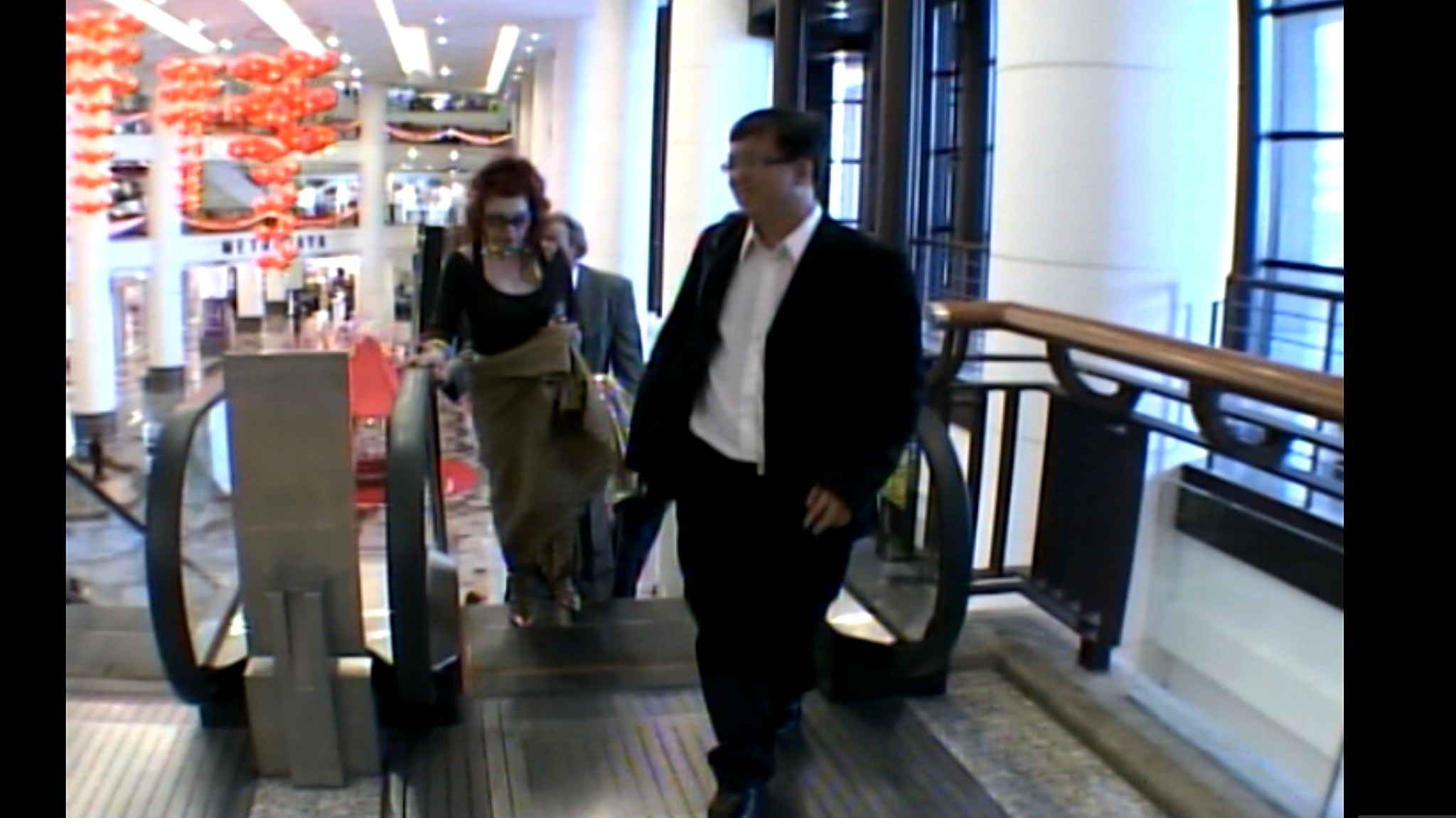
On 22 January 1997, I had met Sylvester Stallone in Singapore. On 22 January 2007, his mother came to launch my book at Borders, Berjaya Times Square. Ten years to the day. After so much time carrying a manuscript, I was riding an escalator beside the woman who had promised to come.
Jacqueline was eighty-five. In her launch speech she spoke about her son’s difficult beginnings and the words that had helped him keep going. Earlier, during our interview at the Concorde Hotel, she had given me advice that was harder to set aside than a compliment: “Practice what you wrote.”
On my Rocky Balboa poster she wrote, “Would You Believe This Day?” The framed poster is still in my home. The photographs, newspaper cuttings and MiniDV tapes preserve the visit. Her question has stayed with me longer than the celebrations.
2026At sixty, the unfinished story was my own.
+
At sixty, the unfinished story was my own.
For years I had been occupied with what Stallone’s story meant. The first In the Eye of the Tiger explored the survival principles in his life and films. What it left largely untold was the experience of the person gathering those ideas: the student, the journalist and the author who nearly stopped.
At sixty, I returned to that part of the journey. I drew on diaries, emails, letters, newspaper cuttings, recordings of my voice and the tapes of Jacqueline’s visit. Where memory was unsure, I said so. The passing years gave me a greater appreciation for the people who had helped.
My Rocky Story: One More Round tells that personal story. The revised In the Eye of the Tiger returns to the ideas that first inspired it. Each can be read separately. Together, they bring me back to Jacqueline’s challenge: what had I actually done with the words I collected?
Read “What this book is” and the story beneath it ↗YOUR ROUNDThe next part of the story belongs to you.
+
The next part of the story belongs to you.
Perhaps there are words you have kept close for years. Perhaps you took a chance that made little practical sense, or someone kept a promise when you needed it most. Perhaps there is a piece of work you have put away and still think about.
That is where the question begins: What is your Rocky story? You do not need to be a fan. You only need something that matters enough to consider another attempt.
The private reflection gives you four prompts drawn from my journey. Write as much or as little as you like, then make a card to keep. Your answers stay in your browser; nothing is submitted to me.
Find your round ↗